
Shower Tile Installation & Waterproofing in Brea
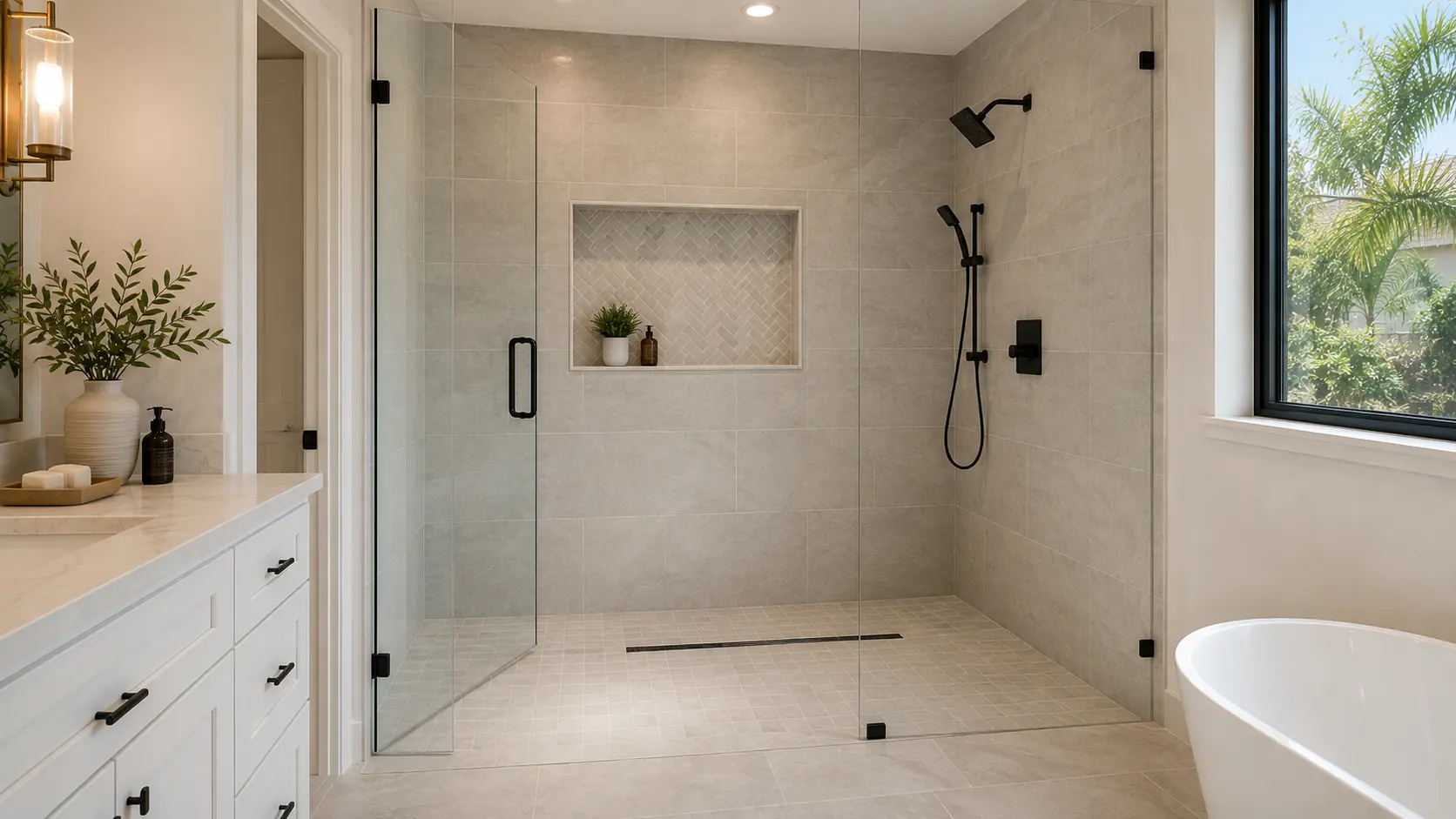
A properly built shower tile installation in Brea, CA starts with waterproofing before a single tile goes up — sloped pans, sealed membrane seams, and a niche built into the layout, not added after. Curbless entries, walk-in showers, and full tile surrounds are built to hold up under daily use, not just look good on install day.
Waterproofing Comes First
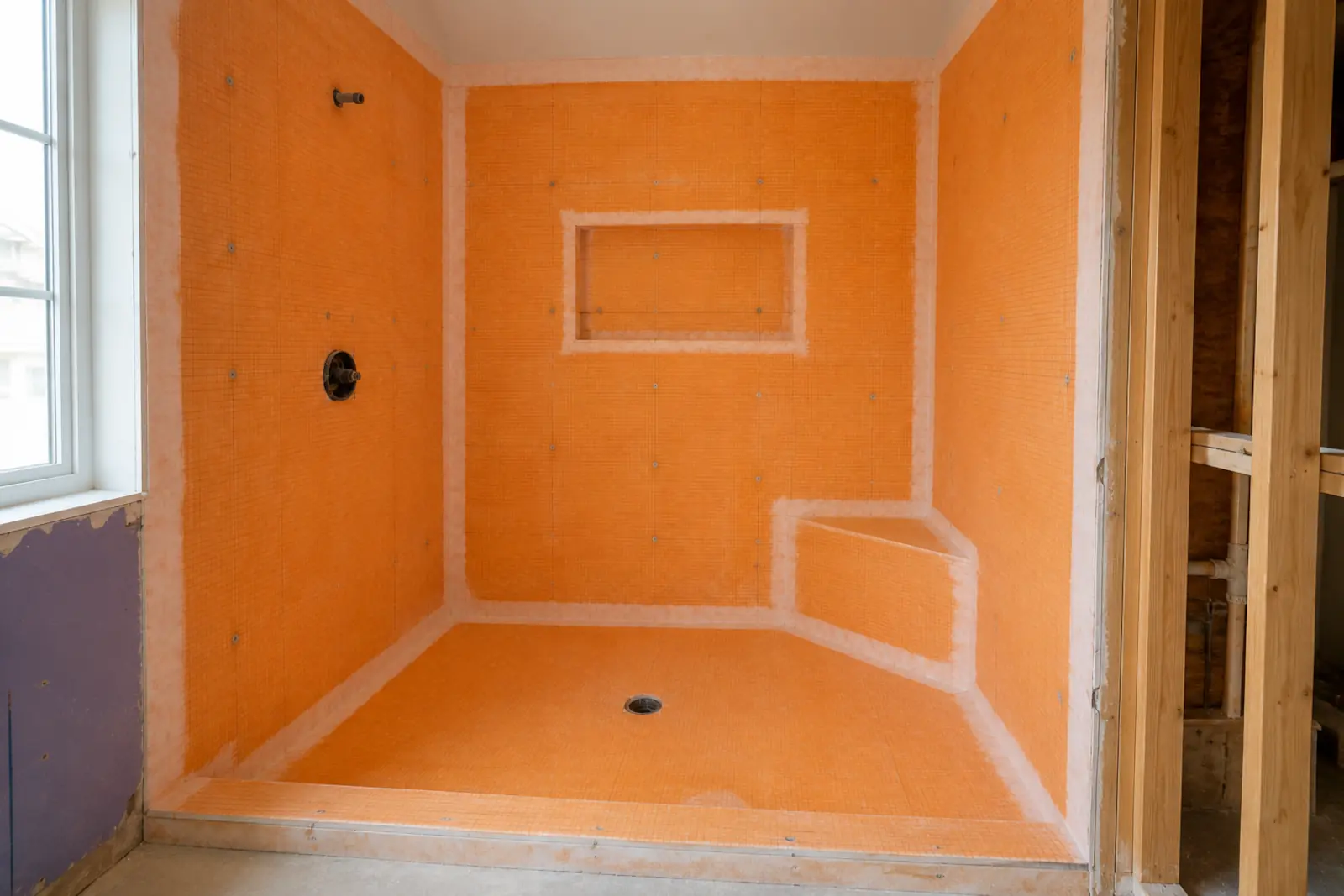
A pre-sloped mortar bed sets the pitch toward the drain before the pan liner or membrane goes down, so water moves the right direction instead of pooling at the curb. Hot mop was the traditional shower waterproofing method in Southern California for decades, but sheet and liquid-applied membranes have largely replaced it — both are available in products designed to meet TCNA Handbook and ANSI A118.10 requirements when installed according to manufacturer specifications. Liquid-applied membranes can be useful around complex transitions, benches, and irregular shapes, while sheet membranes provide a consistent factory-controlled thickness across larger flat surfaces.
Curbless Showers & Custom Niches
A curbless shower pan removes the step-over threshold entirely, which means the waterproofing and slope have to extend further into the bathroom floor to keep water contained — a heavier lift than a standard curbed pan, and one that has to be planned before framing, not after. A built-in shower niche follows the same rule: the box gets waterproofed and flashed as part of the shower membrane, not caulked in after the fact, so it doesn’t become the first place a leak shows up.
What Goes Into a Properly Built Tiled Shower
A shower tile installation project is a sequence, and skipping a step is where leaks come from later. It starts with the substrate and framing — confirming the walls and floor are sound and ready to take a waterproofing system. From there, the pan gets its pre-slope, angling the base toward the drain so water has somewhere to go. Waterproofing goes over that: membrane across the pan, walls, and any niche, with every seam and penetration sealed. Where local code calls for it, a flood test confirms the pan holds water before anything gets covered up. Layout comes next — dry-fitting tile to plan cuts, pattern, and niche placement before any thinset touches the wall. Then the tile itself gets set, followed by grout and sealant once the installation has cured. Each step depends on the one before it, which is why a rushed waterproofing stage or a skipped flood test tends to show up as a slow leak months or years later, not a problem on install day.
Shower tile installation costs vary considerably based on demolition, waterproofing system, shower size, tile format, niche details, and whether the project is curbed or curbless. See the full Brea tile installation cost guide for typical project ranges and the factors that affect pricing.
Looking for bathroom tile installation in Brea beyond the shower? Large-format floor tile installation uses the same leveling and waterproofing standards applied across our full tile installation in Brea services.
Shower Tile Installation Brea CA FAQ
How much does a tiled shower cost in Brea?
Costs vary based on demolition, waterproofing system, shower size, tile format, and whether the design is curbed or curbless. See the Brea tile installation cost guide for typical project ranges.
What waterproofing do you use behind shower tile?
Sheet membrane or liquid-applied membrane, chosen based on the shower’s layout — many products in both categories are designed to meet ANSI A118.10 requirements when installed per manufacturer specifications. Liquid-applied works well for curbless transitions, benches, and tight corners; sheet membrane suits standard flat-panel showers and pans.
Can you build a curbless shower?
Yes. A curbless design extends the slope and waterproofing further into the bathroom floor, so it needs to be planned before framing rather than adjusted after.
How long is a shower out of use during installation?
Many shower tile projects take roughly a week or longer from demolition through final grout and cure time, depending on waterproofing requirements, tile format, layout complexity, and substrate repairs.