
Outdoor Patio Tile Installation in Brea
Patio tile installation in Brea, CA calls for materials and methods built for full Southern California sun, not the same products used indoors. An exterior tile installer works with slip-resistant outdoor tile, proper slope for drainage, and thinset rated for exterior exposure — so the finished patio holds up through summer heat instead of cracking or lifting.
Built for SoCal Sun, Not Freeze-Thaw
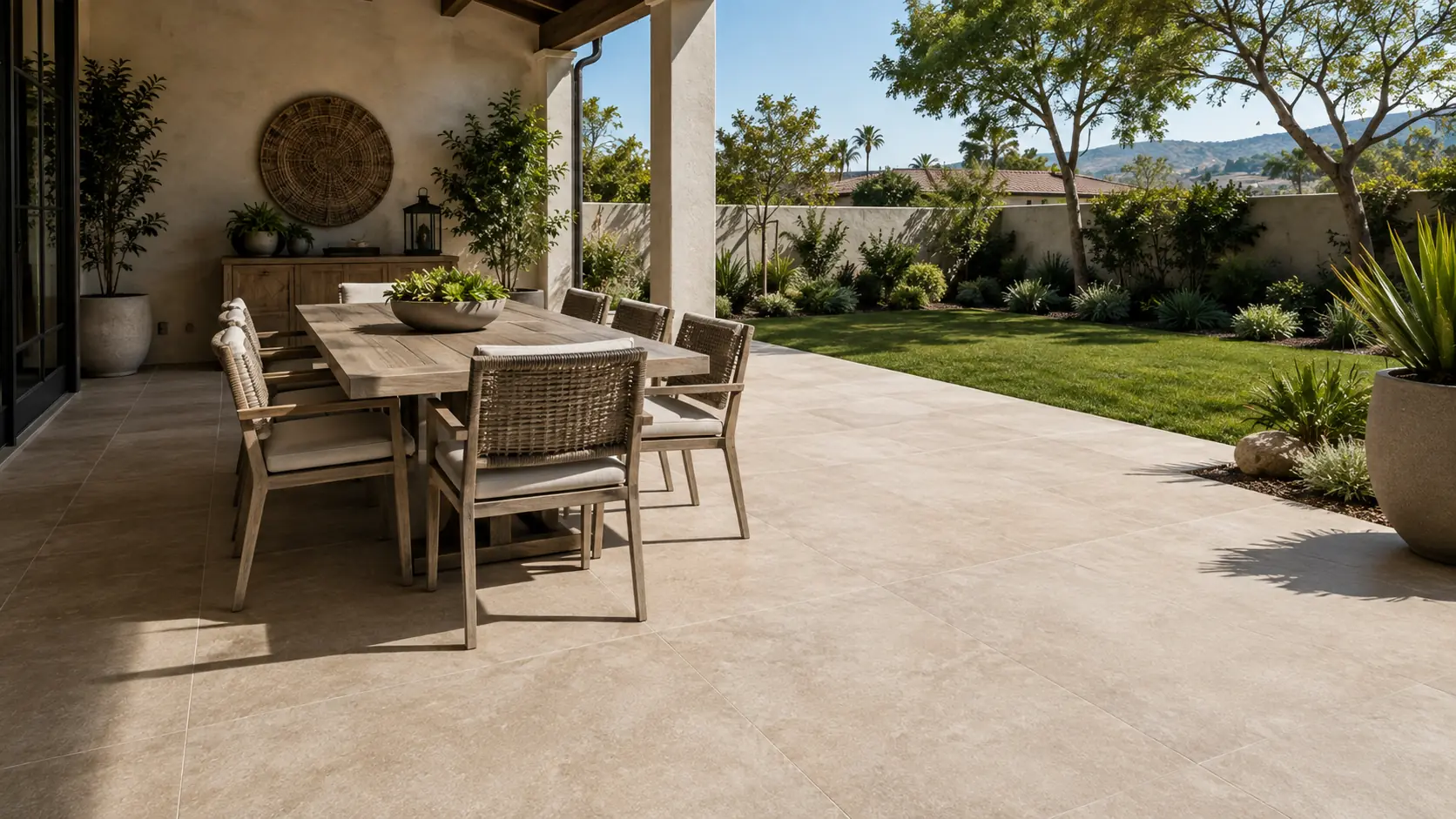
Outdoor tile in Brea doesn’t have to survive freeze-thaw cycling the way it would in colder climates, but it does have to survive year-round UV exposure and summer surface temperatures that can get uncomfortably hot underfoot. Outdoor porcelain pavers hold color and resist fading far better than concrete or lower-fired tile, and their low water absorption keeps them from degrading under constant sun. Travertine patio tile stays noticeably cooler underfoot than porcelain or concrete, which is why it shows up so often around SoCal pools and patios despite needing more regular sealing than porcelain.
Slip Resistance Matters Outdoors
Slip-resistant outdoor tile is rated by its DCOF (dynamic coefficient of friction) — a wet-traction number that matters far more outdoors than indoors, especially around a pool deck or anywhere water sits on the surface. A textured or matte finish outperforms a polished one here even when it’s the same material, which is why outdoor-rated tile lines are usually a different finish than their indoor counterparts, not just the same tile moved outside.
What Goes Into a Properly Installed Patio
A patio tile installation in Brea, CA starts with the existing slab — checking for cracks, settling, and whether it holds the slope needed to move water away from the house rather than toward it. Cracks in an existing concrete patio typically call for a crack-isolation membrane before tiling over, per TCNA Handbook exterior installation methods, so a crack in the slab doesn’t telegraph straight up through the new tile. Thinset for exterior use is a different formulation than interior thinset, rated for temperature swings and UV exposure the tile itself will see. Layout gets planned around drains and slope lines before setting begins, and grout — along with sealant on natural stone like travertine — is chosen to handle constant outdoor exposure rather than the gentler conditions of an indoor floor.
Patio tile installation costs vary based on square footage, material, existing slab condition, and drainage or slope work needed. See the full Brea tile installation cost guide for typical project ranges and the factors that affect pricing.
Looking to extend the same tile indoors? Our floor tile installation page covers large-format porcelain and travertine for interior spaces, part of our full tile installation in Brea services.
Outdoor Patio Tile Installation Brea FAQ
What tile works outdoors in Southern California?
Outdoor porcelain pavers and travertine patio tile are the two most common choices in Brea — porcelain for low maintenance and fade resistance, travertine for its cooler surface temperature underfoot.
Is outdoor tile slippery when wet?
Not when it’s rated correctly. Slip-resistant outdoor tile uses a textured or matte finish with a DCOF rating suited for wet conditions, unlike polished indoor tile.
Can you tile over an existing concrete patio?
Often, yes — as long as the slab is sound. Cracked or settled concrete usually needs a crack-isolation membrane first so existing damage doesn’t transfer up into the new tile.