
Floor Tile Installation in Brea, CA
Floor tile installation in Brea, CA covers large-format porcelain, wood-look plank, and travertine — set flat over a properly prepped subfloor so the finished floor stays level and crack-free for years, not just on install day.
Subfloor Prep & Uncoupling Membrane
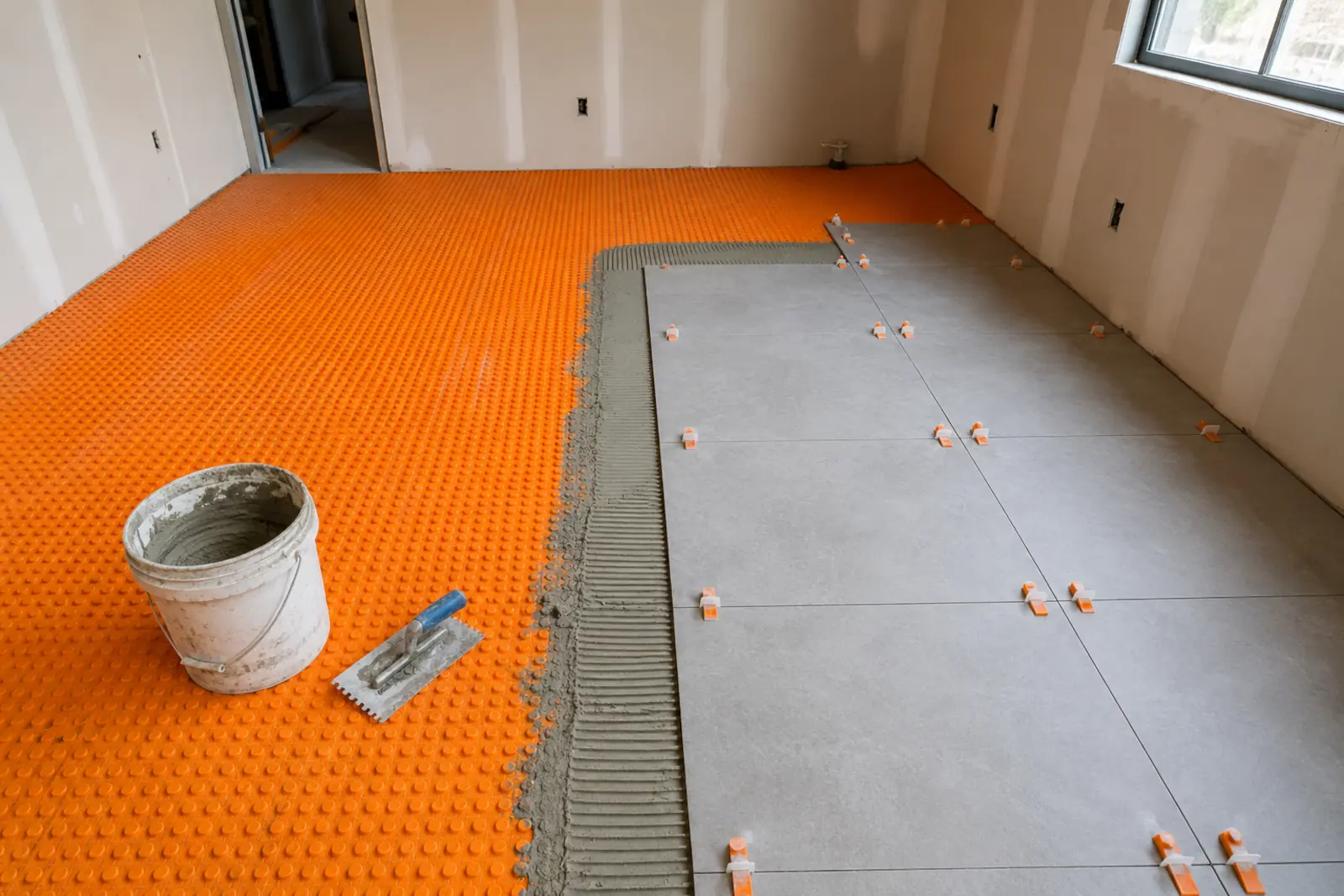
Before any tile goes down, the subfloor has to prove it can hold the load — flat within tolerance, structurally sound, and free of excess deflection. On a concrete slab, that includes checking for residual moisture, which SoCal slabs can carry more of than the surface shows. An uncoupling membrane goes over the subfloor to absorb minor substrate movement and keep hairline cracks from telegraphing up through the tile — recommended by TCNA Handbook methods for wood subfloors and larger-format tile over concrete alike.
Large-Format Porcelain, Wood-Look Plank & Travertine
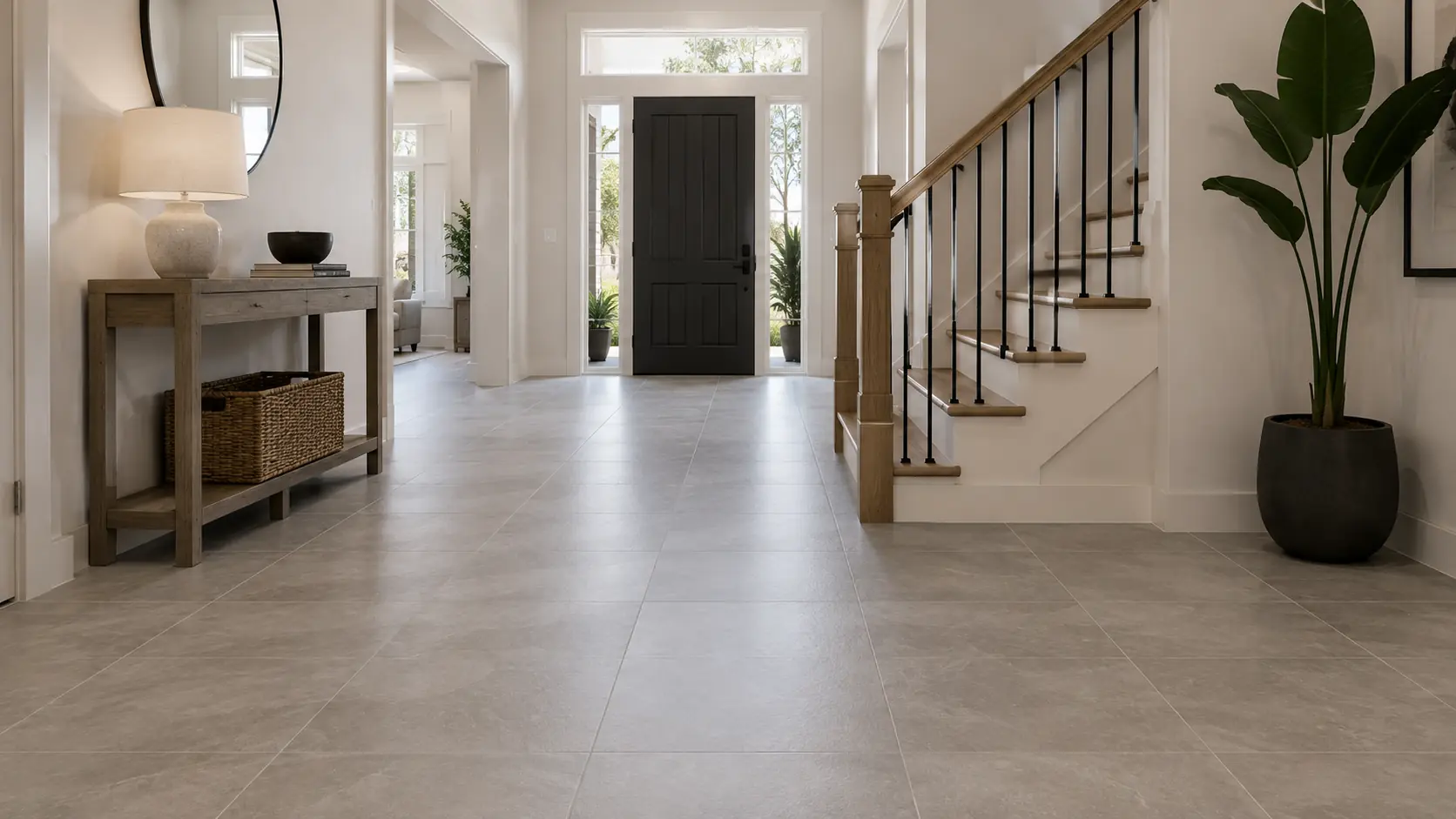
Large-format porcelain floor tile reads as one continuous surface with fewer grout lines, but it’s harder to cut and needs a flatter substrate to sit without lippage. Wood-look tile plank gives the look of hardwood with none of the moisture concerns, though plank shapes need a staggered layout planned in advance to avoid a repeating pattern. Travertine floor tile is porous and needs sealing before grout and again after — skip that step and grout haze or staining sets in permanently, the same risk as unsealed stone on a backsplash.
What Goes Into a Properly Installed Floor
A floor tile installation in Brea, CA follows a strict order because each step builds on the one before it. It starts with a subfloor check — flatness, structural soundness, and for concrete, a moisture test. Any low spots get self-leveling compound before anything else happens; tile set over an uneven substrate cracks or drums hollow later, not on install day. Underlayment or uncoupling membrane goes down next where the subfloor calls for it. Layout comes before setting — dry-fitting the room to center cuts, plan the plank or tile direction, and avoid slivers at the walls. Thinset gets back-buttered on large-format tile in addition to trowel ridges on the floor, so coverage stays close to full contact rather than leaving voids under the tile that show up as cracks under foot traffic later. Grout is chosen to match the tile’s joint width and, for travertine, to complement a stone that’s already been sealed. The finished floor gets a final seal on porous stone once grout has cured.
Floor tile installation costs vary based on square footage, material — porcelain, wood-look plank, or travertine — subfloor condition, and underlayment needs. See the full Brea tile installation cost guide for typical project ranges and the factors that affect pricing.
Pairing new floor tile with a kitchen backsplash refresh? Kitchen backsplash installation uses the same layout and material standards applied across our full tile installation in Brea services.
Floor Tile Installation Brea FAQ
How much does floor tile installation cost in Brea?
Costs vary based on square footage, tile material, subfloor condition, and underlayment needs. See the Brea tile installation cost guide for typical project ranges.
Do you remove existing flooring?
Yes. Removing existing flooring is typically part of the process, and it also gives a chance to inspect the subfloor underneath before installation begins.
What is uncoupling membrane and do I need it?
An uncoupling membrane sits between the subfloor and tile to absorb minor substrate movement and keep cracks from telegraphing up through the tile. It’s recommended for wood subfloors and larger-format tile, and not always required over a sound concrete slab.
Can you tile over an existing tile floor?
In some cases, if the existing tile is flat, sound, and well-bonded. More often the existing floor is removed first to confirm the condition of the subfloor underneath.